
About SQuIDS Lab
At the intersection of Software Engineering and AI
The SQuIDS Lab investigates how software systems can achieve high quality, robustness, and resilience in an era dominated by AI and data-intensive applications.
We study intelligent, data-driven systems, with a strong focus on methodologies, empirical research, and real-world impact across application domains such as smart mobility and biodiversity monitoring.
Software Engineering
Modern software increasingly intertwines with data, learning algorithms, and complex ecosystems of services and devices. Our research focuses on understanding, measuring, and improving software quality, especially in AI‑enhanced and cyber‑physical contexts.
Empirical SE
We design and conduct empirical studies to understand developer behavior, software evolution, and quality dynamics.
AI4SE
Investigating how large language models and AI assistants impact software development, testing, and education.
SE4AI
Methods and tools to ensure reliability, transparency, and maintainability of AI-based components.
Web Testing
Automated testing techniques for modern web systems, including dynamic and data-driven web apps.
Didactics of SE
Studying how students learn SE, and exploring the role of LLMs in programming education and teaching cases.
Human Factors
We explore cognitive, social, and organizational aspects of software development teams.

Data-driven Smart Mobility
Modern cities generate massive amounts of spatio‑temporal data through sensors, mobile devices, vehicles, and public infrastructures. We explore data-driven methods to uncover patterns, improve mobility systems, and support sustainable, intelligent cities. Specifically, we investigate:
Mobility Data Analytics
Methods to analyze trajectories, movement patterns, and human mobility behaviors.
Knowledge Discovery
Mining large-scale mobility datasets to identify recurrent patterns, anomalies, or areas of interest.
Smart Cities & Intelligent Transportation
Insights and tools that improve traffic flow, safety, and sustainability.
AI-powered Systems
Artificial intelligence increasingly shapes how modern systems perceive, learn, and make decisions. Our research explores how to design, evaluate, and deploy AI‑powered technologies that operate reliably in complex, dynamic environments.
Design and Evaluation of AI Systems
Principles, methods, and studies for building AI‑powered systems and assessing their performance and reliability.
Responsible & Transparent AI
Techniques and frameworks that promote explainability, fairness, accountability, and trust in AI-powered applications.
Data-Centric AI
Approaches focused on improving data quality, curation, augmentation, and governance to enable dependable and high‑performing AI models.
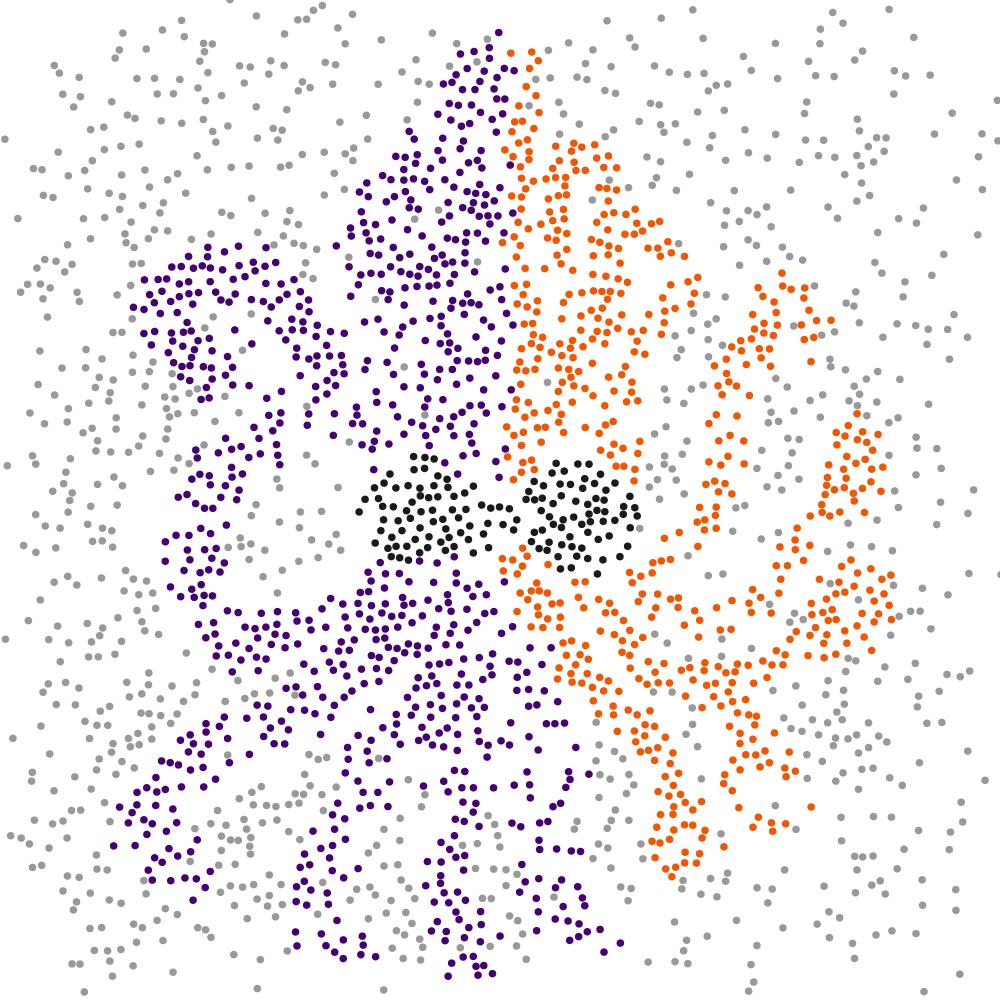
⬤ Squid
⬤ Cyber-squid
⬤ Squid eye
⬤ Unrelated
Collaborations